Senior Technology Advisor
United States of America

Session Abstract
Level 200. SharePoint Framework (SPFx) is Microsoft's standard for building custom experiences across SharePoint, Copilot, Teams, Viva, and Outlook. If you're ready to move beyond out-of-the-box configurations and start building real solutions, this session will show you everything you need to get from zero to deployed. In this session, you'll learn the complete SPFx development workflow: - The SPFx Landscape: Where SPFx fits—web parts, extensions, Teams apps, ACEs, and Viva Connections - Dev Environment Done Right: What you need for Node.js, tooling, and IDE setup for smooth SPFx development - Your First Web Part: Watch a complete solution get built, debugged locally, and deployed step-by-step - SPFx Toolkit Advantage: See how VS Code's SPFx Toolkit streamlines creation, debugging, and deployment Through live demonstrations, you'll see the entire development lifecycle, learn the gotchas that trip up new developers, and understand how to structure your workspace for long-term productivity. Whether you're transitioning from Classic SharePoint customizations or starting fresh with modern development, you'll leave with a clear roadmap for building your own solutions. No theory overload. No outdated patterns. Just the practical foundation you need to start building production-ready SPFx solutions.
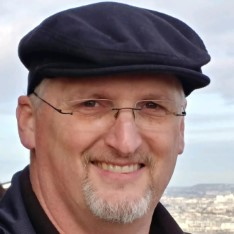
Don Kirkham
As a Microsoft MVP in M365 Development and Microsoft Graph, Don has spent the last 20 years working with companies of all sizes, helping them maximize their productivity in SharePoint, Office 365 and Azure. With over 30 years of programming experience, Don's passion for coding is centered around the complete Microsoft ecosystem of cloud technologies. He loves working the entire development stack, from database design to the user interface, including no code/low code solutions in the Power Platform. Prior to working full-time as a software developer, Don spent 20 years as a pilot in the Air Force, accumulating over 4500 hours in various aircraft, including the T-1A, E-3B/C, and T-38.
Don can deliver sessions in
Relevant industries
Connect with Don