AI Evangelist
Norway
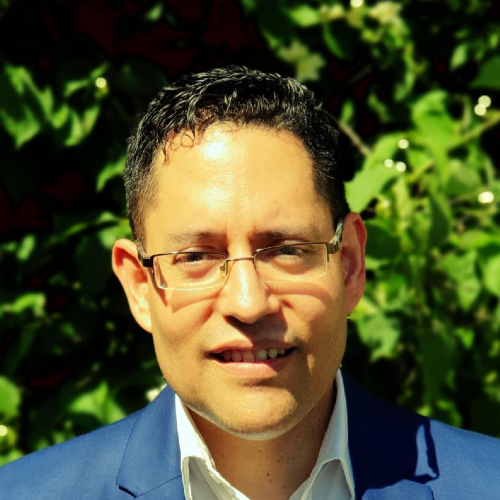
AI Evangelist
Håkan holds a Master of Science degree in Electrical Engineering and a Master’s degree in Leadership and Organizational behavior. He has also taken courses on university level in psychology, interaction design and human-computer interaction. He has 20 years’ experience of software development in various positions such as developer, tester, architect, project manager, scrum master, practice manager and team lead. Håkan is Chairman of the Norwegian .NET User Group Oslo (NNUG) and is active as an Ambassador for Oslo AI, the local chapter for the global City.AI community. In addition, he is the co-founder of AI42, an online school for learning about AI and Data Science and the Azure User Group Sweden, a meetup focused on Azure. Håkan is a Microsoft Most Valuable Professional (MVP) in AI and a Microsoft Certified Trainer. Currently Håkan is working as AI Evangelist at Sopra Steria.
Did you know that you can use Copilot in order to build a canvas app? In this session I will demonstrate how you can use Copilot in order to build your canvas app. Copilot can assist you with adding and editing controls to your app. We will look at how you can use prompting in order to get the best help from Copilot. We will also look at how you can setup copilot so that your users can use it in the context of your app. This can be achieved by adding the Copilot control to your app. Using this control your users can get insights into your app using natural language. As a builder you can choose what data Copilot can answer questions about. After this session you will be able to build more powerful apps with the guidance of copilot.
Read moreDid you know that you can combine various AI services such as Open AI, Azure Open AI and Hugging Face in your own custom application? In this session you will learn how you can build your own CoPilot experience using the Semantic Kernel which is released as an open source project. I will demonstrate how you can use skills, memories, connectors and plugins in order to enhance the experience for your users. This session is a developer focused session meaning that you do not need to have any AI knowledge in order to benefit from the examples demonstrated in the session.
Read moreIn this session, I will present a practical approach to RAG architecture. Some key terms that will be introduced include: - RAG architecture - Vector search - Vector embeddings - Semantic search - Azure AI Search - Azure Document Intelligence - Search strategies The goal is for you, as a participant, to leave with a solid understanding of how a RAG architecture can be implemented and how to establish an effective search strategy.
Read moreMicrosoft recently introduced the Microsoft Agent Framework, an open‑source SDK and runtime that unifies ideas from Semantic Kernel and AutoGen into a single framework aimed for enterprise‑ready agentic systems. It focuses on durability, observability, security, workflows, and human‑in‑the‑loop execution. In this talk, we will explore: - What Microsoft Agent Framework actually is (and what it is not) - How it models agents, workflows, memory, and orchestration - Why Microsoft merged research‑oriented agent frameworks with enterprise infrastructure
Read moreCloud AI isn't always the best place to start. With Foundry Local, developers can build, test, and optimize AI applications entirely on their own machines before seamlessly moving to Microsoft Foundry when it's time to scale. In this demo-driven session, I will show how to install and configure Foundry Local, discover and manage local models, and build AI applications that can switch between local and cloud models with minimal changes. We'll also cover topics such as GPU acceleration and ONNX optimization, helping you understand how they improve performance in local AI workloads. Whether you're experimenting with generative AI or building enterprise-ready solutions, you'll leave with practical knowledge, best practices, and the confidence to start developing AI locally.
Read more