AI Workforce Lead
United States of America

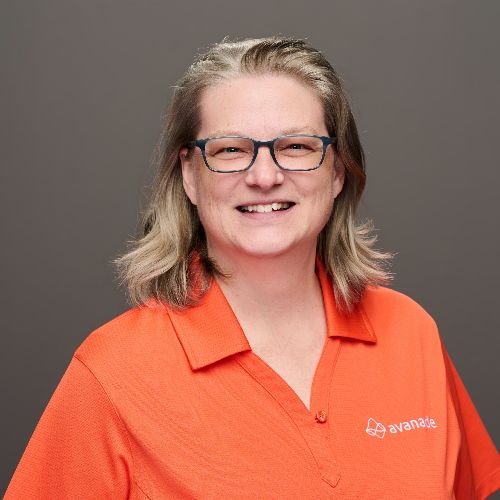
Copilot MVP | AI Workforce Lead
Tiffany Songvilay is a powerhouse in modern workplace transformation and AI enablement. As the Global Tech Lead for Avanade’s Copilot Adoption Program and a key player on the North America Copilot Rapid Response Team, she’s helped enterprise clients go from “just testing” to “fully thriving” with AI—boosting productivity, collaboration, and digital know-how along the way. A Copilot MVP and go-to advisor, Tiffany leads global teams, builds enablement and security frameworks, and hosts Prompt-a-thons that make prompt engineering feel less like rocket science and more like second nature. She’s a pro at showing off Copilot in action—whether it’s in Microsoft 365, SharePoint Premium, Viva, or Power Platform—and her sessions are known for being both insightful and refreshingly real. From breaking down metadata extraction in SharePoint to helping teams master the new collab stack (hello Loop, Teams, and Copilot!), Tiffany brings clarity, energy, and a whole lot of credibility to every stage she steps on. Outside of work, she’s a fierce advocate for women of color in STEM and a champion for diversity and LGBTQ+ inclusion. Her LinkedIn posts are packed with practical tips on prompt engineering, and she’s a fan favorite for making even the nerdiest topics fun. Oh—and when she’s not leading AI transformations? You’ll find her on a motorcycle or cuddling her senior rescue dog.
Current Sessions Delivered by Tiffany
Organizations are moving quickly from AI experimentation to enterprise-wide deployment of copilots, assistants, and autonomous agents. While many organizations focus their early efforts on governance and technology, they often struggle with a more fundamental question: who owns AI, how are decisions made, and what operating model will enable AI to scale across the business? The organizations seeing the greatest business value from AI are establishing Centers of Excellence that connect strategy, business priorities, technology teams, risk stakeholders, and end users. Rather than acting as a gatekeeper, a modern AI CoE serves as an accelerator by providing clear direction, repeatable processes, and a framework for turning ideas into measurable business outcomes. In this session, we'll explore how leading organizations are designing AI operating models that support sustainable adoption of copilots and autonomous agents. Through practical frameworks, real-world examples, and lessons learned from enterprise AI programs, we'll discuss how to establish ownership, prioritize use cases, manage demand, build organizational capabilities, measure value, and create the structures necessary to scale AI across the enterprise. Whether you're launching your first AI initiative or expanding into agentic AI, you'll leave with a blueprint for building an AI Center of Excellence that enables innovation, accelerates adoption, and helps organizations move from isolated pilots to enterprise-wide transformation. Attendees will leave with: - A practical blueprint for designing an AI Center of Excellence that aligns business strategy, technology teams, and operational stakeholders. - Frameworks for prioritizing AI investments, managing demand, and selecting high-value use cases for copilots and autonomous agents. - Strategies for defining ownership, funding models, success metrics, and value realization across AI initiatives. - An enterprise operating model that helps organizations scale from experimentation to sustainable AI-powered transformation.
Read moreOrganizations are investing heavily in copilots, AI assistants, and autonomous agents, expecting transformative business outcomes. Yet many AI initiatives struggle to deliver value for a simple reason: the data behind them is incomplete, inaccessible, poorly governed, or disconnected from the systems where work actually happens. While organizations often focus on model selection, prompts, and agent design, successful agentic AI depends on something more fundamental: high-quality, trusted, and discoverable data. AI agents can only reason over the information available to them. When data is fragmented across repositories, trapped in legacy systems, duplicated across platforms, or lacking proper governance, even the most sophisticated agents produce limited results. In this session, we'll explore what data readiness means in the era of agentic AI and how organizations can prepare their information ecosystem to support copilots and autonomous agents at scale. Through real-world examples, architectural patterns, and practical frameworks, we'll examine common data readiness challenges and the strategies leading organizations are using to overcome them. You'll learn how to assess the quality, accessibility, security, and connectedness of your organization's data assets; determine whether information should be migrated, integrated, or surfaced through retrieval mechanisms; and establish the governance practices necessary to ensure agents can access the right information while protecting sensitive data. Whether you're preparing for your first AI initiative or scaling enterprise-wide agent deployments, you'll leave with a practical roadmap for transforming data from a barrier into a competitive advantage for AI. Attendees will leave with: - A framework for assessing organizational data readiness for copilots, AI assistants, and autonomous agents. - Strategies for identifying and addressing common data challenges, including silos, duplication, poor data quality, and inaccessible information. - Practical guidance for choosing between migration, integration, retrieval, and federation approaches when connecting enterprise data to AI experiences. - An understanding of how governance, security, permissions, and knowledge management influence AI outcomes. - A roadmap for creating a trusted data foundation that enables agents to deliver accurate, secure, and meaningful business value.
Read moreTiffany can deliver sessions in
Tiffany speaks about
Relevant industries
Connect with Tiffany

A Look Back at Past Speaking Engagements
North American Cloud and Collaboration Summit
Power Platform Governance and Building a Center of Excellence
07/09/2025
Hilton Branson Convention Center
Branson, United States of America
North American Cloud and Collaboration Summit
Mastering Copilot Pages: Your Guide to Microsoft's Latest Collaboration Solution
07/09/2025
Hilton Branson Convention Center
Branson, United States of America

M365 Community Conference
Boosting Employee Development with Viva Goals and Copilot
28/04/2024
Orlando
Orlando, United States of America
M365 Community Conference
We've Got MS Teams. Do We Still Need a Modern Intranet?
28/04/2024
Orlando
Orlando, United States of America